Outdoor oven insulation thickness depends on the chamber size, refractory mass, temperature and intended use. One number cannot describe every construction. Establish the complete cross-section first, allowing room for insulation, support and the exterior enclosure.
Define how the oven will operate
Decide whether you want brief live-fire cooking or also intend to use stored heat after firing ends. Record the chamber dimensions, firebox material and space for base and dome insulation. Include the surrounding conditions and requirements for the outside surface temperature.
A product's maximum temperature does not describe heat transfer through the finished oven. Assessment needs material properties under operating conditions and the complete layer arrangement. Guidance for a prefabricated model applies only to a compatible construction.
Match the insulation format to its position
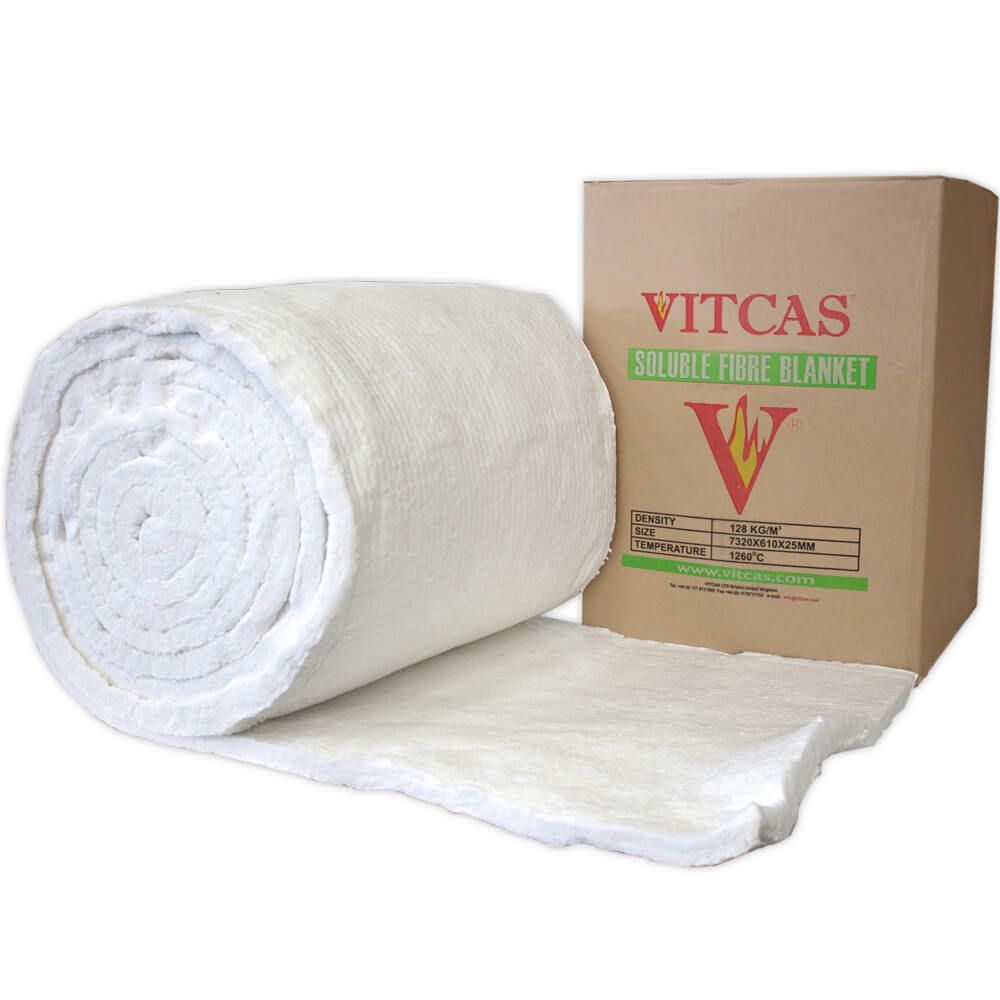
Vitcas ceramic fibre board provides rigid insulation in suitable assemblies, including beneath a compatible oven chamber. Ceramic fibre blanket follows a curved dome more easily. Both need appropriate support or retention.
Loose-fill insulation has another role and requires a designed enclosed space. It does not form a rigid base or replace the fixing of a flexible blanket on an exposed surface. Select the format before finalising the enclosure dimensions.
Check continuity and weather protection
Inspect the entrance, base and flue interfaces. Extra thickness at the centre of the dome will not correct omitted details. Protect insulation from water and damage as specified, and avoid accidentally compressing it below the designed thickness during fitting.
If the material changes, check the effects on support, exterior temperature and adjacent layers. Keep the approved cross-section. Later additions and repairs can then follow the installed arrangement rather than a guess about how much blanket was fitted.