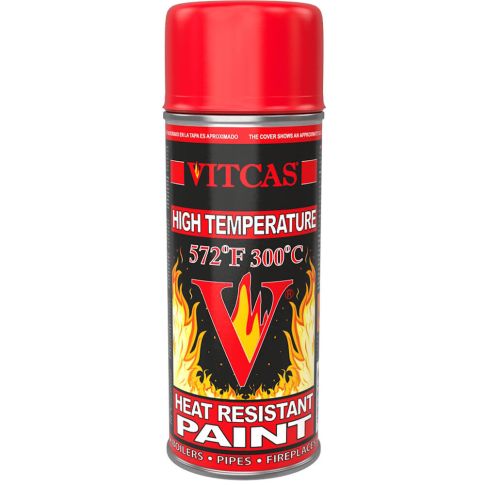
When refurbishing steel barbecue parts, start by determining which surfaces can be painted. The housing, grate, and food contact areas have different functions. A single heat-resistant paint may not be suitable for all parts of the device.
Separate metal repairs from painting
On a cold barbecue, inspect corrosion, joints, and moving parts. A gap, crack, or loosened bracket requires assessment before surface preparation. The coating does not restore thickness or load-bearing capacity of weakened steel.
Check the condition of the previous paint. Remove loose residues using a method appropriate for metal, and assess the preserved layer for compatibility with the new product. Preparation also includes the required degreasing and drying, without leaving dirt at the corners.
Confirm the intended use of the product
Vitcas heat resistant paint has a declared resistance up to 800°C in the described applications. The manufacturer indicates that it has not been tested for direct contact with food. Therefore, do not use this temperature as confirmation of the coating's suitability on the grate.
The instruction describes application without a primer. Do not add a random layer that may have lower thermal requirements. Protect mechanisms, contact surfaces, and seals; heat-resistant silicone also requires separate selection for proper connection.
Plan execution before lighting the fire
Check the application conditions, the number of required stages, and the preparation of the coating for use. Paint under conditions in accordance with the instructions and the safety data sheet, with necessary protection of the surroundings. Do not apply the material to a heated part or in the flame.
After preparation for work, inspect the edges and check the operation of movable elements. Note the places where the coating wears off quickly. At the next renewal, this will allow assessment of mechanical contact and the condition of the steel, instead of applying increasingly thick paint to the same problem.